
If you are considering AI voice for collections you are probably not asking "Can it sound human?" anymore. You are asking: What happens when a consumer says "don't call me again," disputes the debt, or starts talking about lawyers?
Under FDCPA, TCPA, and Regulation F you cannot afford to get those edge cases wrong. A single missed "do not call" request or a disputed account that keeps getting dialed can turn a promising AI project into a compliance incident.
In this article we will walk through how a well-designed AI agent should handle opt-outs and disputes, what actually needs to happen in your systems, how DROS wires those rules in, and how you can configure the AI's context so it reliably follows them. For a wider view of how AI agents fit across the full collections lifecycle, that is a good place to start.
If you are running AI-powered payment reminder campaigns, these same rules apply to every outbound reminder call and message.
1. The Regulations Behind "Don't Call Me Again"
Let's translate the alphabet soup into a few practical rules for day-to-day operations:
AI doesn't change these rules. It just adds new failure modes if your stack can't capture what was said and turn it into enforceable flags and workflows in real time.
2. How AI Agents Actually Follow Instructions (The Context Window)
Every AI voice agent sits inside a context window: the system and behavior instructions you pass in before each call. This is where you hard-code your compliance expectations and escalation rules. A solid context for collections will include:
- What to treat as a DNC / consent revocation intent ("don't call me again", "take me off your list", "remove my number").
- What to treat as a dispute intent ("I don't owe this", "this isn't my account", "I already paid this").
- How to acknowledge and close the call when those intents appear.
- When to escalate to a human (legal threats, harassment complaints, language the model isn't trained for).
- What structured events to emit back to the platform (ADD_TO_DNC, MARK_DISPUTED, TRANSFER_TO_AGENT).
In DROS you can think of it as a chain:
Your DROS campaign specifies: "If a DNC intent is detected, immediately flag the phone number as DNC on this account, write a note with exact wording and timestamp, end the call politely, and prevent this number from being scheduled in any future campaign." Those instructions are mirrored in the agent's context - and DROS enforces the rule consistently, not just "inside the model's head."
3. Do Not Call: From "Don't Call Me" to a Real DNC Flag
From the consumer's viewpoint this should be simple: they say "Don't call me again," and the calls actually stop. Under the hood a compliant AI + DROS flow looks like this:
Intent detection
Verbal confirmation
Event to DROS
DROS updates the record
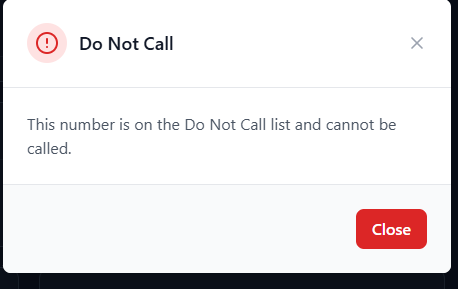
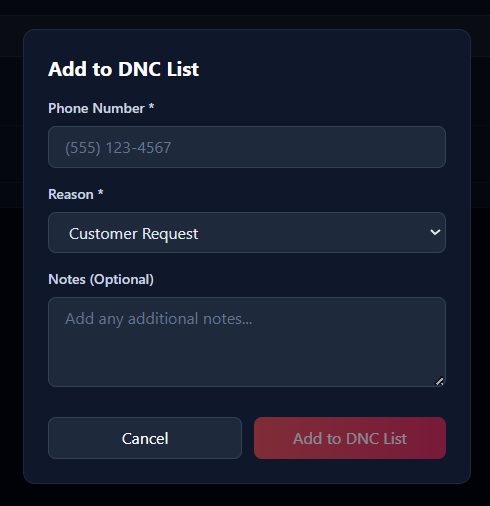
This is how you turn TCPA's "honor reasonable revocation" language into a concrete, auditable system behavior.
4. Handling Disputes Gently and Knowing When to Transfer
Disputes are where you most want a calm, consistent first response and quick escalation to a human when needed. We cover the full picture - scripts, escalation rules, and workflow events - in our article on how AI voice agents handle debt disputes. A good dispute flow:
Detect dispute language
Acknowledge and de-escalate
Collect minimal context
Emit a MARK_DISPUTED event
Escalate when appropriate
In DROS that transfer can target a specific queue (e.g. "Disputes" or "Consumer Complaints"), and the transcript and tags land directly in the agent's workspace so they are not starting from zero.
5. Call Hours, Timezones, and Reg F Call Frequency
Reg F and FDCPA expect agencies to:
- Avoid calling at times they know (or should know) are inconvenient - typically before 8 a.m. or after 9 p.m. in the consumer's local time.
- Stay within Reg F's call-frequency presumptions (no more than 7 attempts in 7 days per debt, and no calls within 7 days after a live conversation).
In DROS you model this at the campaign level, not just inside the agent's prompt.
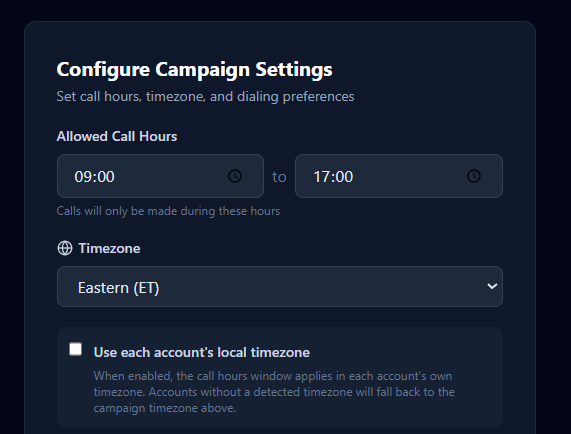
- You define allowed call hours (for example 09:00 to 17:00).
- You can choose 'use each account's local timezone' so a 9 a.m. Eastern campaign doesn't accidentally hit West Coast consumers at 6 a.m.
- AI agents and human-driven campaigns share the same call-hour and timezone rules. No one can schedule outside the window.
- Behind the scenes DROS can also track per-debt call attempts and 'days since last successful conversation' to help you respect Reg F's 7-in-7 framework.
6. Why AI + DROS Is a Compliance Guardrail, Not a Risk
AI agents don't replace your compliance program - they execute it more consistently. When you design things this way:
"Don't call me again" becomes:
- a clear DNC intent in the AI context
- a DNC flag and note in DROS
- a hard block on all future calls from any campaign
"I don't owe this" becomes:
- a Dispute intent
- a paused workflow and dispute queue in DROS
- a human follow-up aligned with FDCPA/Reg F expectations
"What if the AI calls at the wrong time?" becomes:
- call-hour and timezone rules defined once in DROS
- enforced automatically for every AI and human call
- with a single audit trail to show regulators or clients
This is what an AI collections operating layer looks like in practice - rules defined once, enforced everywhere.
FAQ
A well-configured AI agent is trained to recognize phrases like "don't call me again", "stop calling", or "take me off your list" as a Do Not Call (DNC) request, confirm it verbally, and trigger an event that adds the number to your internal DNC list and blocks future calls in your campaigns.
Yes, if they run inside a platform that enforces call-frequency rules, call-hour windows, consent tracking, and dispute workflows. The model alone cannot guarantee compliance, but an operating layer like DROS can hard-code these constraints into every AI and human campaign.
When the AI detects a DNC request it sends a structured event to DROS, which immediately flags the number as Do Not Call, logs a timestamped note on the account, and prevents any future campaigns from dialing that number, regardless of channel or agent.
The agent acknowledges the dispute, collects minimal clarification, and sends a MARK_DISPUTED event so DROS can pause collection on that account and route it to a dispute or compliance queue in line with FDCPA expectations about disputed debts.
Yes. Your context window can define clear escalation rules - legal threats, repeated disputes, or high emotional distress - where the agent offers a warm transfer to a human collector or supervisor and passes along the transcript and tags.
DROS lets you set allowed call hours, local timezone behavior, and call-frequency policies at the campaign level. AI agents can only make outbound calls inside those parameters, which helps you stay within Reg F's 7-in-7 limits and avoid calling at inconvenient times.
AI increases risk only if it runs as a loose, standalone tool. When it is integrated into a system that centralizes DNC, consent, disputes, call-hours, and audit logs, it often reduces risk by enforcing your policies the same way on every single call.
Ready to See DROS in Action?
Schedule a personalized demo to see how DROS handles DNC, disputes, and compliance guardrails in real time.